Why Chestnut Genetics Matter: Choosing the Right Trees
Plant the wrong chestnut and you may not know it for years.
By the time inconsistent production, poor nut quality, or disease becomes apparent, you've already invested years in the wrong trees.
Whether you're planting an orchard, growing chestnuts for your family, or establishing trees for wildlife, the genetics you choose today can make a difference for decades.
Not All Chestnut Trees Are Equal
Chestnut trees are often marketed as hybrids or sold under recognizable names, such as Dunstan which is not a documented cultivar. But the names alone doesn't tell you everything you need to know about a tree's genetics, parentage, or expected performance.
Trees grown from seed can inherit different combinations of traits, even when their seeds come from the same parent tree. Growth, nut quality, and other characteristics can vary.
The same principle applies to trees sold under general hybrid labels. Without documented parentage and selection history, it's difficult to know what traits a particular tree may pass on or how consistently it will perform.
That doesn't mean every seedling will be a poor tree. It means buyers deserve to know as much as possible about the genetics they're planting.
Which Chestnut Cultivars Should You Research?
Whether you're growing chestnuts for food or want to plant better chestnut trees for deer than your neighbors have planted, start by researching named cultivars with identifiable parentage and documented characteristics.
Some named selections worth investigating include:
Qing
Auburn Super
Payne
Peach
Yixian Large
Gideon
Hong Kong
Perry
Sleeping Giant
These are examples of selections to research, not a ranking or a guarantee that every cultivar will thrive in every region.
When comparing them, consider the traits that matter most to you: nut size, flavor, ease of peeling, productivity, tree growth, disease tolerance, and adaptation to your climate.
A cultivar that performs well in one location may not be the best choice for another. Whenever possible, look for documented results from growers or research programs working under conditions similar to yours.
The goal isn't simply to buy a chestnut tree. It's to choose genetics that fit your purpose and growing conditions.
Seed-Grown Trees vs. Grafted Cultivars
This is an important distinction many buyers overlook.
A grafted tree is produced by attaching material from a selected cultivar to a rootstock. When properly propagated, the above-ground portion retains the identity of that cultivar.
A seed-grown tree is different. It inherits genetics from both parents, and its characteristics can differ from those of the parent tree. Planting a seed from an excellent chestnut cultivar does not guarantee that the resulting tree will be identical to its parent.
Seed-grown trees can still be valuable, productive trees. However, buyers should understand that growing a seedling from a named cultivar is not the same as growing a grafted copy of that cultivar.
Ask the nursery exactly what you're purchasing and how the tree was propagated.
What Should You Look for When Buying Chestnut Trees?
Before buying, ask these four questions:
1. What are the genetics?
Ask for the cultivar name, parentage, or seed source. A seller should explain what is known about the tree rather than relying on a broad marketing label.
2. Is the tree seed-grown or grafted?
This helps you understand whether the tree is expected to retain a named cultivar's characteristics or may vary genetically.
3. What is known about its performance?
Look for credible information about nut quality, productivity, disease tolerance, and growth under comparable growing conditions.
4. Is it suited to my location and purpose?
The best tree for a commercial nut orchard may not be the best choice for wildlife, timber, or a small homestead planting.
Taking time to ask these questions can help you make a better-informed decision before investing years in your trees.
Our Approach at Chestnuts in the Ozarks
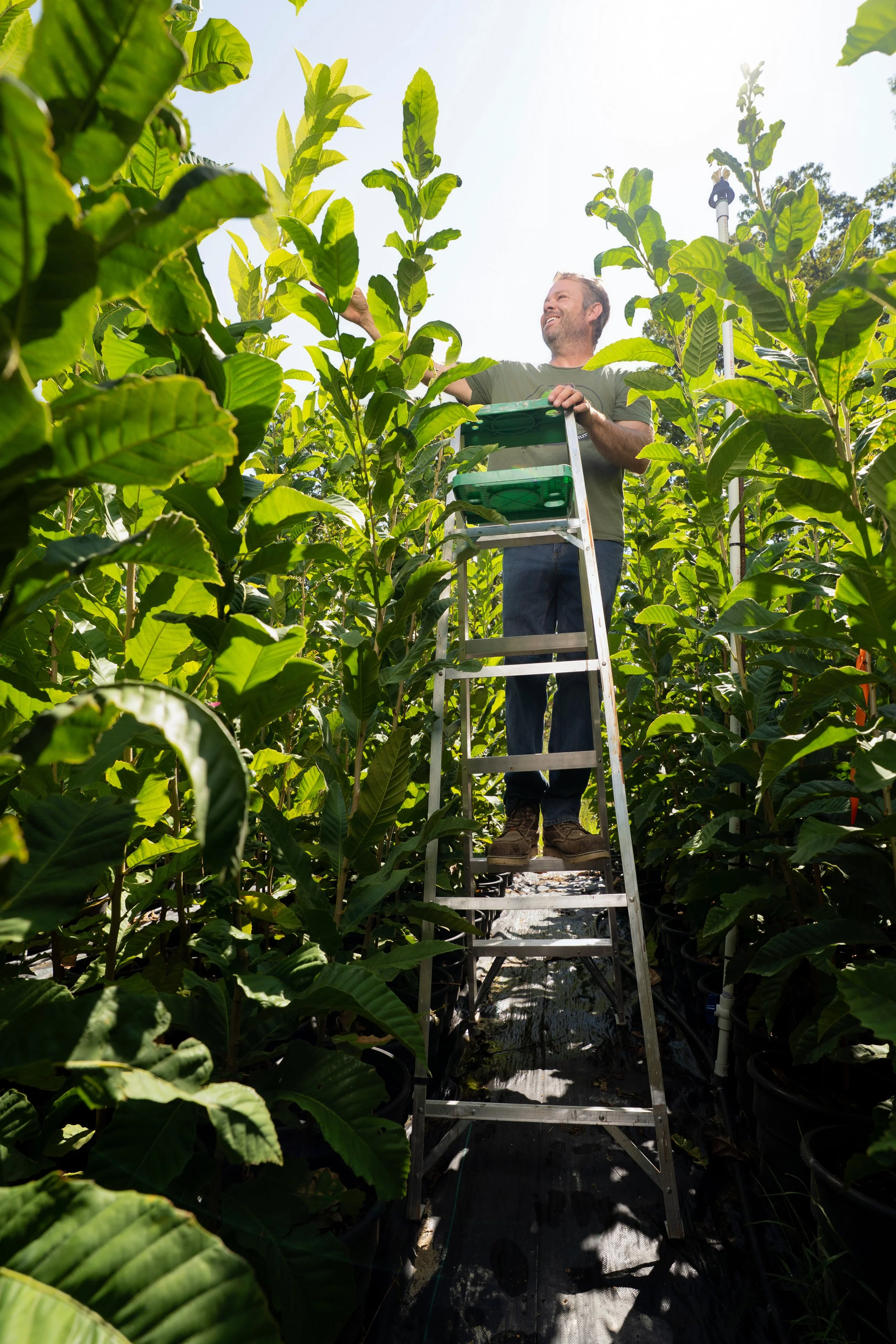
At Chestnuts in the Ozarks, we've spent years building an orchard and nursery around chestnut genetics.
We've sourced and grown chestnuts from more than 40 cultivars and seed sources, giving us practical experience with the diversity available to growers.
Our focus is on genetics relevant to successful chestnut growing, including growth, nut quality, and the characteristics that matter in an orchard. We also value the importance of documented parentage and understanding where planting material originates.
We grow our nursery trees from seed each spring. That means we can offer vigorous young trees, but we also believe customers should understand that seed-grown offspring are not genetically identical copies of their parents.
We want our customers to make informed decisions about what they plant. We believe that starts with being honest about genetics, propagation, and what is known about a tree's characteristics.
We grow these trees ourselves, and we won't sell you something we wouldn't plant on our own farm.
The Bottom Line
Chestnuts can be a long-term investment in food production, wildlife, and the land. But not all chestnut trees have the same genetic background, and not all planting material offers the same level of predictability.
Research the cultivar. Ask about parentage. Understand whether the tree is seed-grown or grafted. Look for documented characteristics and consider your local growing conditions.
Don't just plant a chestnut tree. Know what you're planting.
At Chestnuts in the Ozarks, we're working to help more people grow chestnuts by offering nursery trees and sharing what we've learned along the way.
Explore our chestnut trees and learn more about growing chestnuts in the Ozarks.